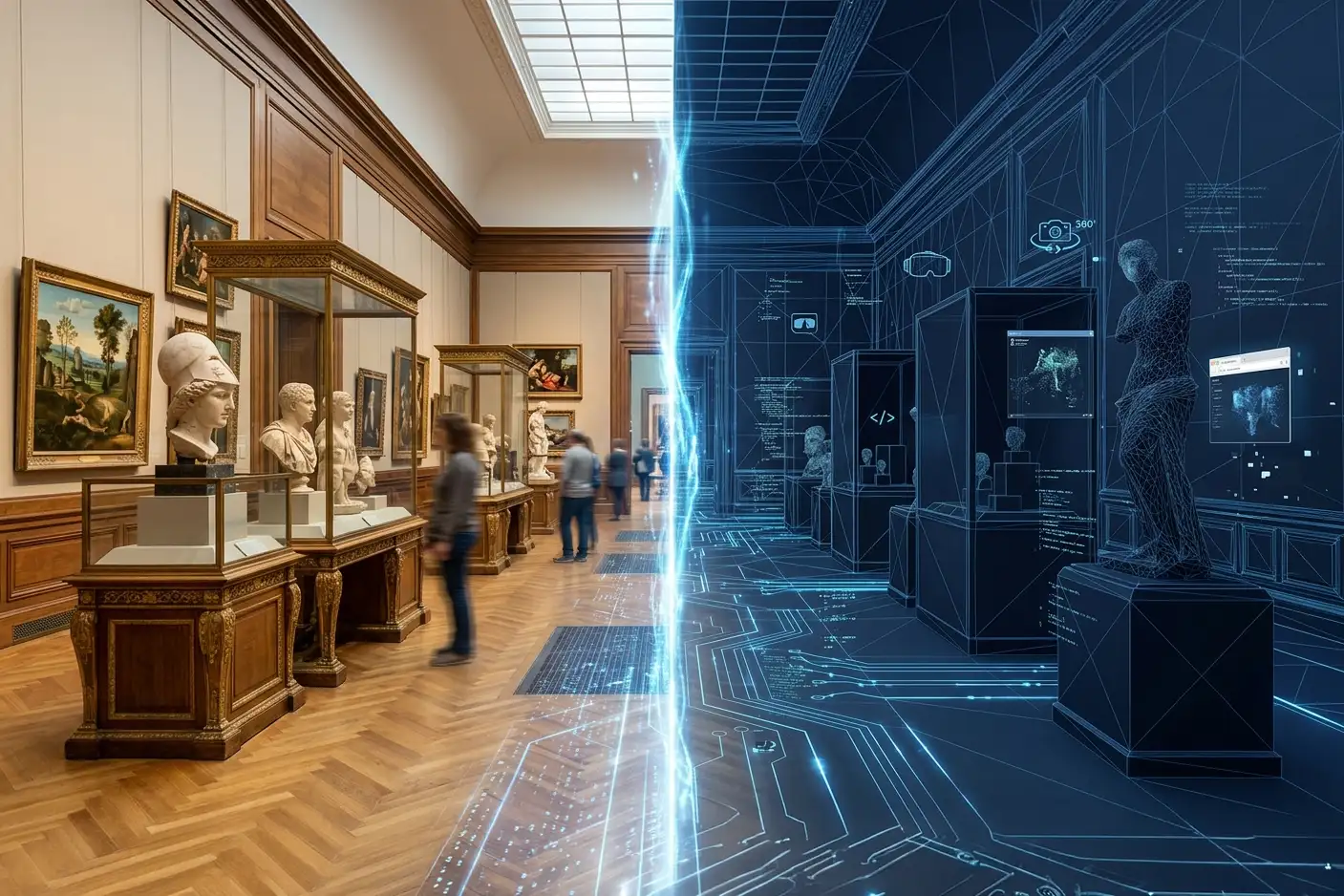
The “Virtual Experience for Art” project was born with the aim of redefining the way cultural heritage is narrated, enjoyed, and promoted through digital technologies.
In a context where access to information is increasingly immediate, it is no longer enough to make spaces visible: it is necessary to create experiences capable of conveying meaning, engaging visitors, and establishing a connection with cultural content. This is precisely the project's mission: to transform digital consumption into an immersive, narrative, and accessible experience, capable of adapting to different contexts.
Through the integration of virtual environments, multimedia content, and guided tours, the platform allows visitors to explore museums, villages, and regions not just as physical places, but as interconnected cultural systems. The goal is to offer a tool that goes beyond representation, becoming a true means of enhancing, promoting, and preserving heritage.
In this vision, digital does not replace real-world experience, but rather expands and enriches it, creating new opportunities for access, knowledge, and engagement over time.
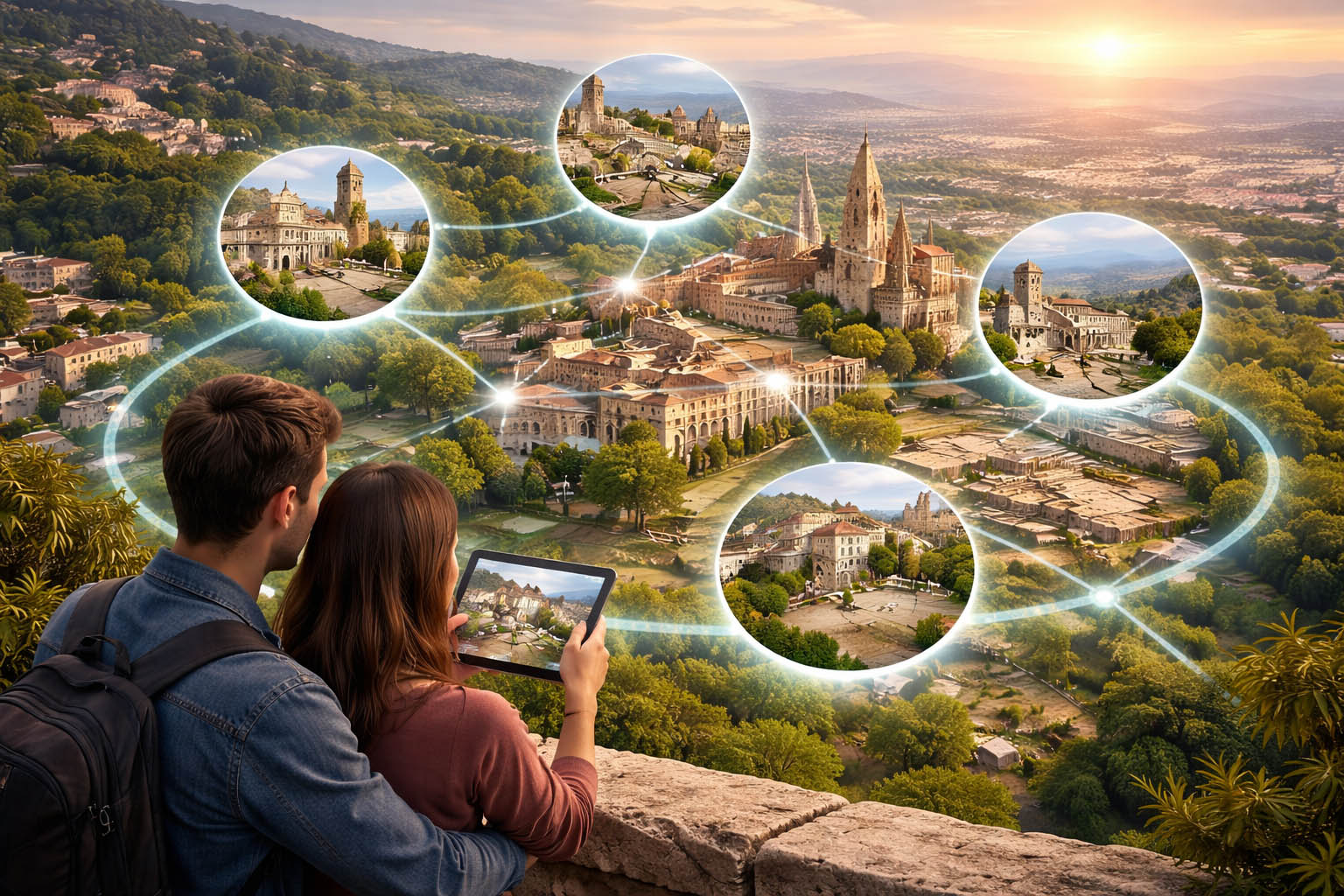
The Concept of a Diffused Museum The project is perfectly suited to both enclosed spaces like traditional museums and larger contexts like villages, regions, or networks of points of interest. In this sense, it is a true "widespread museum," where each location becomes part of a broader narrative.
The strength of this approach lies in the ability to connect physically distant elements, creating continuity and meaning. Visitors no longer perceive a collection of isolated points, but a coherent ecosystem in which each stage contributes to building a story.
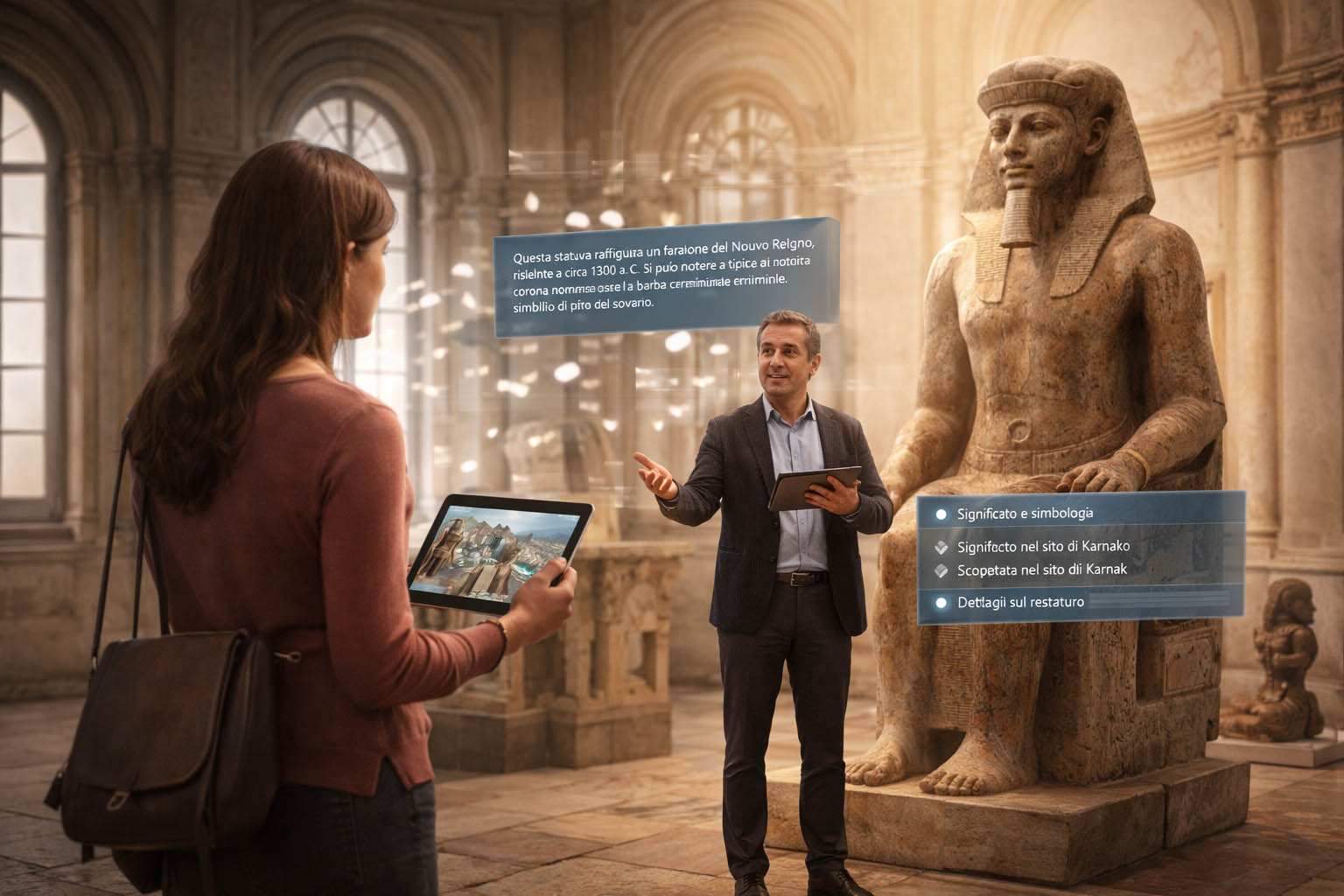
Immersive storytelling The main limitation of most virtual tours is the lack of a true narrative direction. The user can move freely, but without a guide, the risk is that depth and engagement are lost.
Immersive storytelling introduces a dual experience: on the one hand, independent exploration, on the other, the possibility of following a guided path through a narrative voice or structured sequences.
This integration of freedom and guidance is what transforms a simple tour into a complete cultural experience, capable of distinguishing itself and leaving a lasting impact.
Embedded multimedia content Each space and each work are not simply visible, but become access points to progressive levels of exploration. Visitors can choose how much to explore, moving from a general overview to more specific content.
The experience can incorporate high-resolution photographs, videos, historical documents, and in-depth materials. This approach allows for a layered narrative, where information isn't imposed but rather made available in a natural and intuitive way.
The result is a system that is suitable for both a casual audience and more interested and in-depth users.
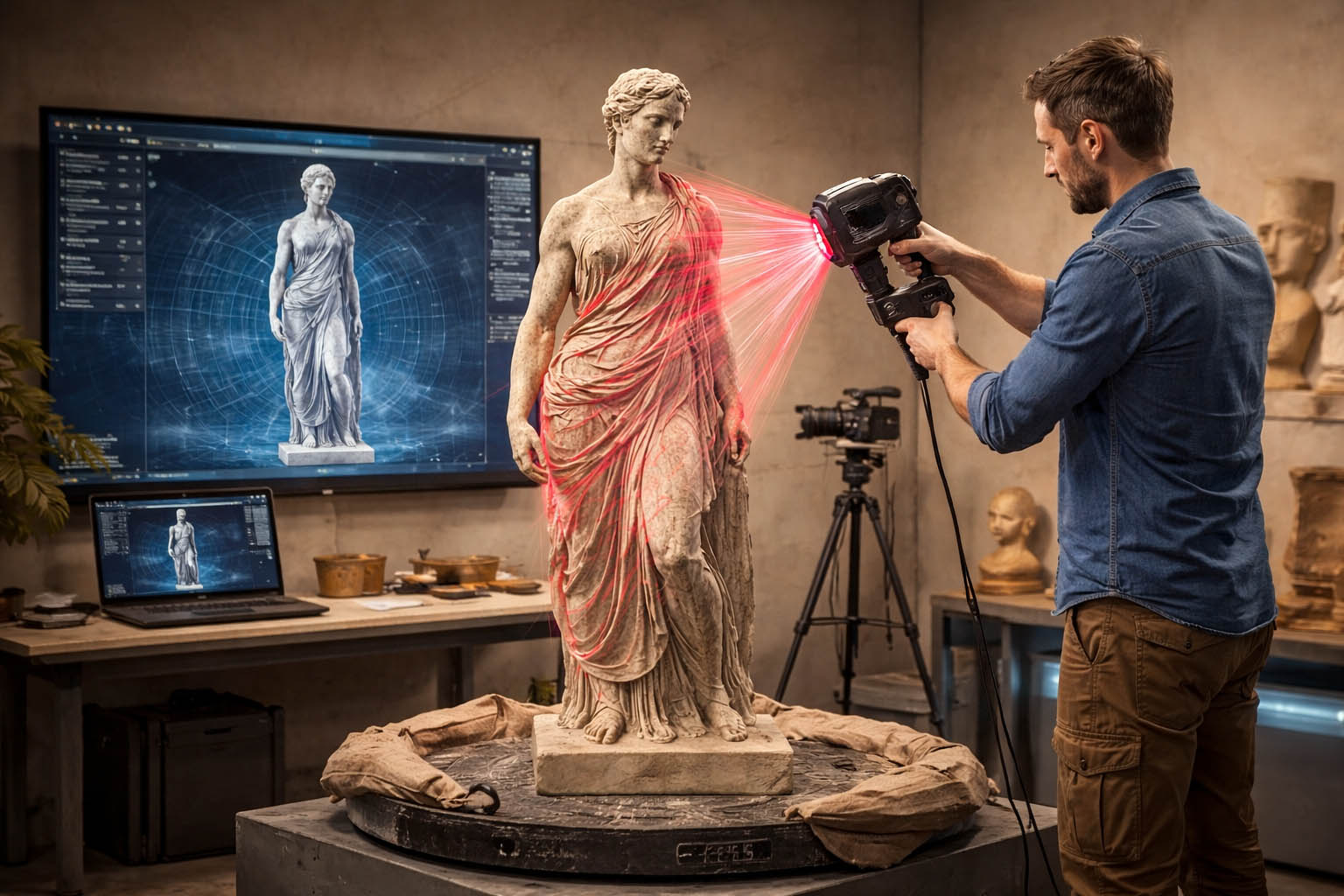
3D Models of the Works Current technologies allow for the acquisition of extremely precise three-dimensional models of works of art, such as statues or artifacts. This, in addition to being a visual enrichment, represents a real leap in quality in their enjoyment. Users can observe details that are often inaccessible in reality, rotate the object, zoom in, and analyze it from new perspectives. Furthermore, each model becomes part of a digital database useful for conservation, study, and restoration. In this way, the project contributes to the protection of our heritage.
Custom Graphical Interface One of the most underrated aspects of virtual tours is the interface. Often standardized, it ends up flattening the experience and making it unrecognizable.
In this project, the interface was designed entirely custom, starting from the client's needs and the location's identity. This allows for a coherent, elegant experience that integrates seamlessly with the existing communications.
The structure is designed to be intuitive and accessible, yet flexible enough to support complex, multilingual content, making the experience accessible to an international audience.
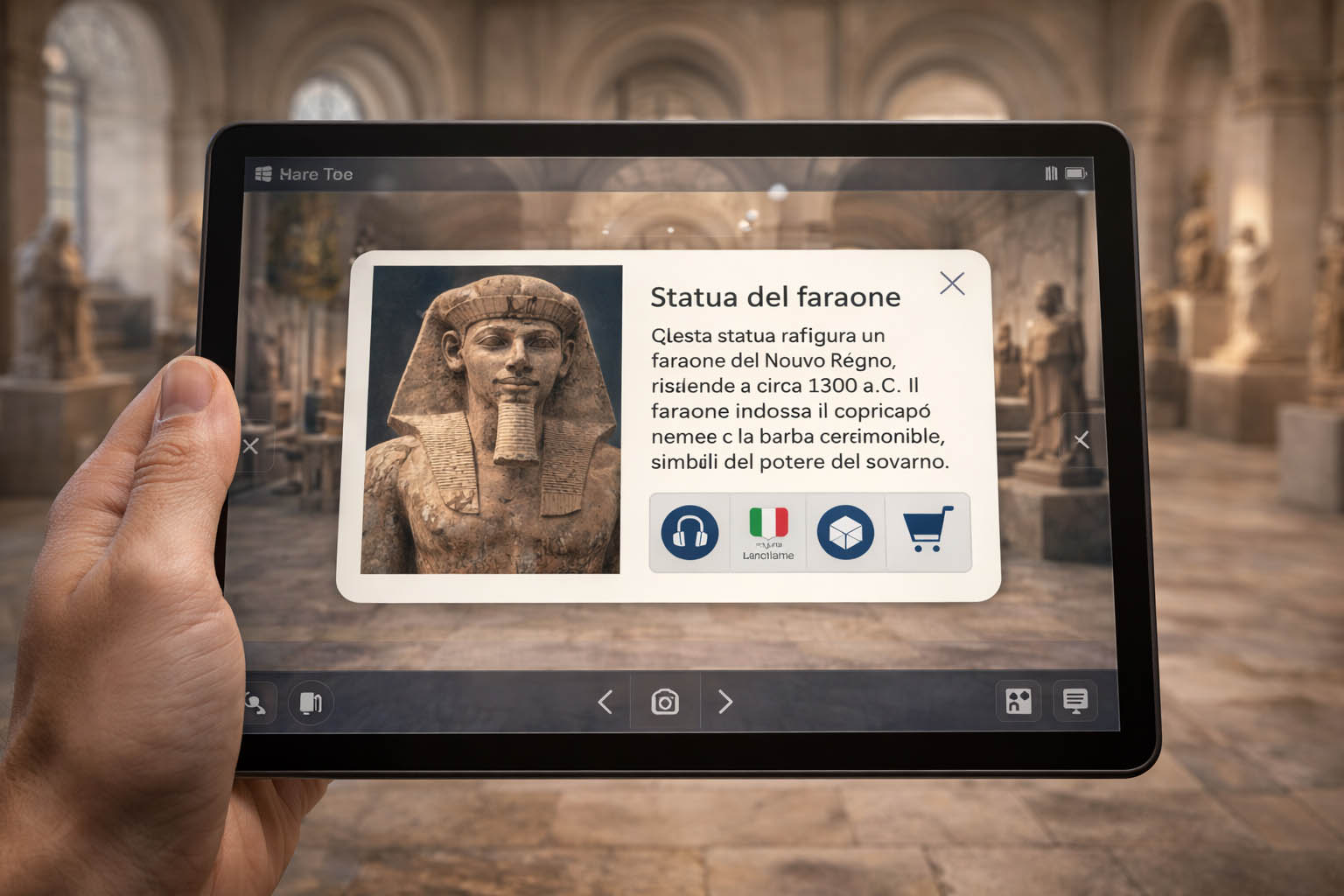
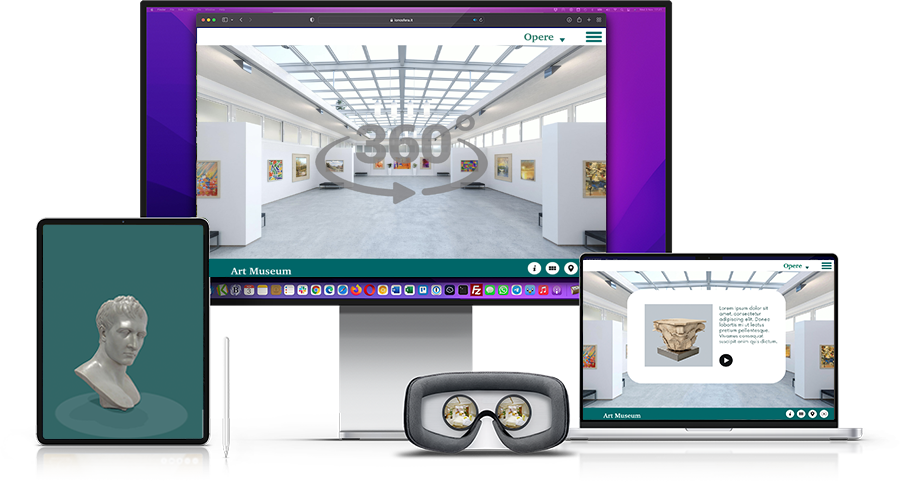
Multi-Device Use The entire system is accessible directly online, with no installation or technical skills required. This ensures immediate and seamless deployment.
The experience automatically adapts to different devices, from phones to iPads, to immersive headsets like Meta Quest and Apple Vision Pro. This means the same content can be enjoyed quickly and easily or in a fully immersive mode, depending on the context and the desired level of engagement.
Immersive Audio Audio is often treated as a secondary element, but in an immersive experience it plays a central role. It doesn't just provide information, it helps build the atmosphere.
Audio guides integrate with ambient sounds and soundscapes, making the experience more believable and engaging. This allows the user's attention to be guided naturally, without visual constraints.
The result is a digital environment that is not only visual, but perceived more fully.
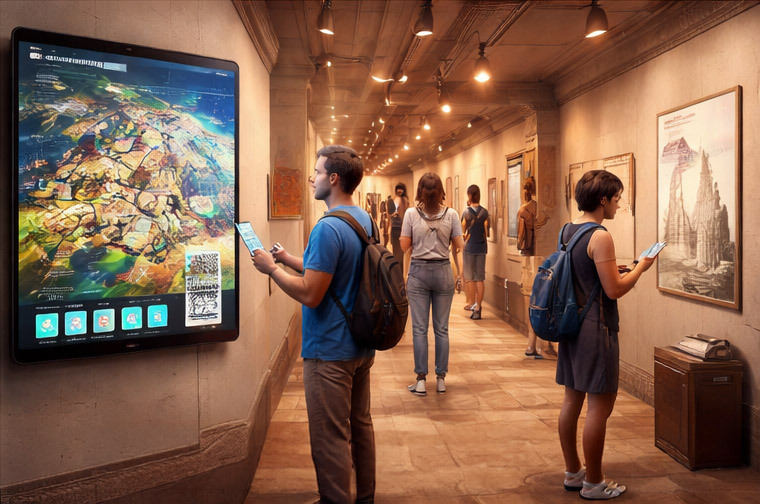
Integration with Physical Space One of the most interesting aspects is the platform's ability to interact with the real world. The digital experience doesn't replace a physical visit, but rather enriches and complements it. Within the museum or the surrounding area, the system can be used as an interactive map to navigate the spaces. Furthermore, thanks to the use of QR codes placed next to the works, visitors can directly access in-depth content on their device. This creates an immediate connection between the physical and digital, transforming each visit into a richer and more personalized experience.
Upgrade and Control Unlike closed solutions, this platform is designed to evolve over time. Content can be updated, expanded, or modified without having to rebuild the entire project.
This allows the experience to be kept up-to-date, even as new works, courses, or languages are added. Furthermore, direct control over the code guarantees maximum flexibility and independence, avoiding technical or commercial constraints.
This type of project represents a paradigm shift: from a simple visualization tool to a complete narrative platform. It doesn't just showcase a space, but interprets it, narrates it, and enhances it. At the same time, it creates a long-lasting digital archive and opens up new possibilities for use, both remotely and in person. The ultimate goal is to offer an experience that's not only useful, but memorable, capable of standing out and generating value over time.